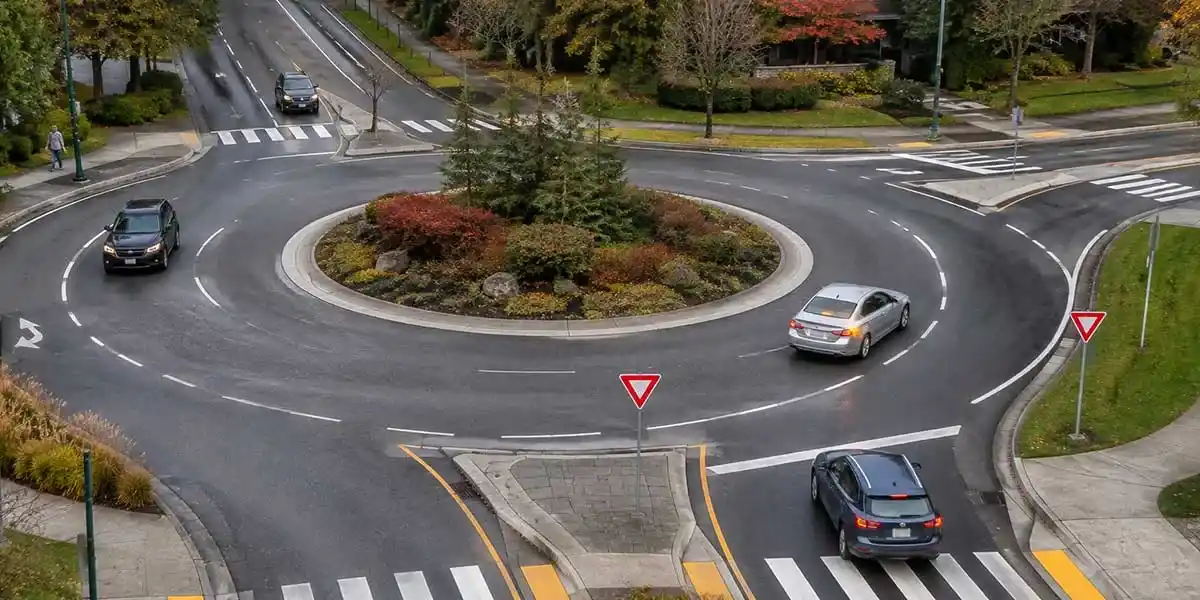
Roundabouts can feel confusing when you’re learning to drive, especially when several vehicles approach from different directions. Understanding roundabout rules in BC helps you make safer decisions and build the skills needed for ICBC road test preparation. Unlike traditional intersections, roundabouts keep traffic moving counter-clockwise around a central island. Drivers must choose the appropriate lane, yield to circulating vehicles, and signal before exiting.
The challenge for beginners is knowing when to enter, which lane to follow, and how to respond to other road users. Once you understand these decisions, roundabouts become easier to navigate. Whether you’re a new driver or improving your existing skills, class 5 driving lessons can help you practice these situations under real traffic conditions.
Roundabout Rules in BC: Quick Reference Table
Before entering a roundabout, use this reference table to understand the correct actions for common driving situations.
| Driving Situation | What You Should Do | Important Safety Detail |
| Approaching a roundabout | Reduce speed and check road signs | Follow the advisory speed and prepare to yield |
| Choosing a lane | Select your lane before entering | Right for right turns, left for left turns; either may allow straight travel |
| Pedestrian crossing | Yield before entering or exiting | Never block a crosswalk |
| Entering the roundabout | Yield to circulating traffic | Check every approaching lane before moving |
| Driving inside | Travel counter-clockwise | Stay in your lane without changing lanes |
| Exiting | Signal right before your exit | Check for pedestrians and cyclists |
| Emergency vehicles | Exit before pulling over if already inside | Never stop in the roundabout to let them pass |
| Missing your exit | Continue safely along your permitted lane path | Follow the road layout and find a safe way to correct your route |
These guidelines follow ICBC’s official roundabout instructions. Posted signs and pavement markings always take priority over general lane-selection guidance.
How to Use a Roundabout in BC: Step-by-Step Guide
If you’ve wondered, “How do you use a roundabout without interrupting traffic?”, the answer begins before you reach the entrance. A safe approach involves three decisions: identifying your exit, checking for other road users, and waiting for an appropriate gap. You don’t need to rush because another driver is waiting behind you.
How to Enter a Roundabout Safely
Follow this sequence when approaching the entrance:
- Slow down: Adjust your speed to the posted advisory speed and road conditions.
- Identify your exit: Check signs and position your vehicle in the correct lane.
- Scan crosswalks: Watch for pedestrians and cyclists before reaching the yield line.
- Check circulating traffic: Look for approaching vehicles in every relevant lane.
- Enter when safe: Maintain a controlled speed and follow the counter-clockwise traffic flow.
A yield sign doesn’t automatically mean a complete stop. Stop when necessary, but proceed when the crossing is clear and a safe gap is available.
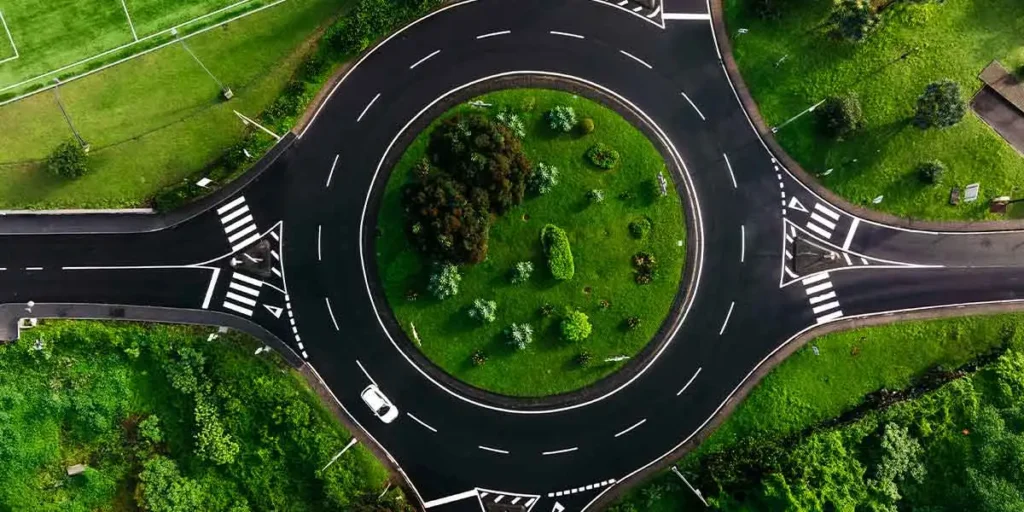
How to Drive Through and Exit a Roundabout
Once inside, maintain your lane and keep a steady, appropriate speed. Avoid sudden braking or unnecessary steering movements. For example, when traveling straight through a typical four-exit roundabout, pass the first exit and signal right before reaching the second exit. Check the exit crosswalk and continue only when safe. Remember that pedestrians may be crossing even when other vehicles are moving normally.
How to Use a Two Lane Roundabout in BC
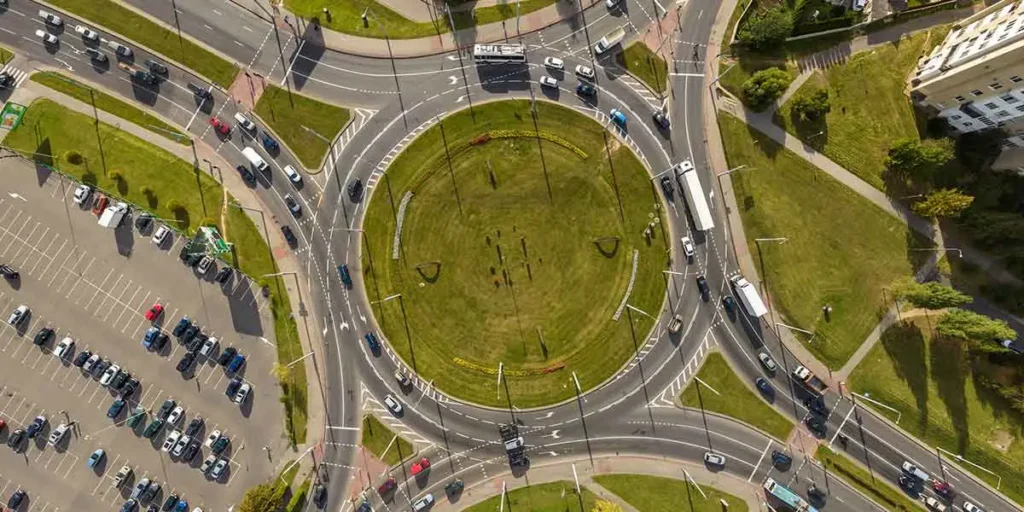
Multi-lane roundabouts require earlier planning because you cannot change lanes after entering.
Choosing the Right Lane for Your Exit
Unless signs or pavement markings indicate otherwise, ICBC provides these general guidelines:
| Intended Direction | Usual Lane Choice |
| Turn right | Right lane |
| Continue straight | Either lane |
| Turn left | Left lane |
| Make a permitted U-turn | Follow the posted lane directions |
Check the lane-direction signs before entering. Not every roundabout follows the same layout.
Staying in Your Lane Until You Exit
Maintain your original lane throughout the roundabout. If you’re in the left lane, don’t move into the right circulating lane to reach your exit. Instead, follow your designated lane path through the exit. Avoid driving alongside large trucks or buses. They may need additional space to negotiate the curve safely. The most important habit is simple: Choose your lane early and follow it consistently.
Right-of-Way and Signaling Rules at BC Roundabouts
Drivers already circulating inside a roundabout have the right-of-way. If you’re approaching the entrance, you must yield until a safe opening becomes available. Knowing how to take a roundabout also means communicating your intentions. ICBC instructs drivers to signal right before exiting, giving other road users time to anticipate their movement.
Remember these priorities:
- Yield to circulating vehicles before entering.
- Check both lanes at multi-lane entrances.
- Signal right before your intended exit.
- Watch for pedestrians and cyclists at exit crosswalks.
Never assume another driver’s signal guarantees they will exit. Observe their actual movement before entering.
How to Properly Use a Roundabout: Common Mistakes to Avoid
Most roundabout mistakes happen when drivers make decisions too late.
Common mistakes include:
- Entering too quickly: Leaves insufficient time to identify hazards.
- Following another vehicle blindly: A safe gap for one vehicle may not be sufficient for the next.
- Changing lanes inside: Creates conflicts with circulating traffic.
- Forgetting to signal: Makes your intended exit less predictable.
- Stopping unnecessarily: Interrupts traffic flow and may surprise following drivers.
If you miss your intended exit, don’t make a sudden turn or cross lanes. Continue along your permitted lane path and find a safe route to your destination.
Roundabouts vs. Four-Way Stops in BC
Roundabouts and four-way stops manage intersection traffic differently. At a four-way stop, drivers must stop completely and follow right-of-way rules based on arrival order and conflicting movements. At a roundabout, entering traffic yields to vehicles already circulating. Drivers may continue without stopping when conditions allow. Understanding 4-way stop rules bc alongside roundabout procedures helps beginners recognize how different intersections operate.
Tips for Navigating Roundabouts on Your BC Road Test
A road test assesses safe driving decisions, not simply your ability to follow a route.
To demonstrate good roundabout driving habits:
- Read signs early and identify the correct lane.
- Adjust your speed before reaching the entrance.
- Scan for pedestrians, cyclists, and approaching vehicles.
- Yield appropriately without rushing.
- Maintain lane discipline and signal before exiting.
Practice how to go through a roundabout in light traffic before progressing to busier conditions.
At Seymour Driving School, instructors help learners develop these skills through practical driving instruction in North Vancouver, West Vancouver, Vancouver, and Burnaby.
Conclusion: Build Confidence at Every Roundabout
Safe roundabout driving comes down to preparation, observation, and clear decisions. Choose your lane early, yield to circulating traffic, maintain a controlled speed, and signal before exiting. With consistent practice, these steps become natural driving habits, helping you navigate BC intersections more confidently and safely.
Frequently Asked Questions About Roundabouts in BC
Who Has the Right of Way in a Roundabout in BC?
Vehicles already circulating inside a roundabout have the right-of-way. Drivers approaching the entrance must yield and wait for a safe gap before entering.
At multi-lane roundabouts, check all approaching lanes, not just the lane closest to your vehicle. Always watch for pedestrians and cyclists at crosswalks.
Do You Need to Signal When Entering or Exiting a Roundabout in BC?
According to ICBC, drivers must signal right before exiting a roundabout.
Choose the correct lane before entering, follow posted signs, and use your exit signal early enough to communicate your intentions.
Avoid signaling in ways that could confuse other drivers about which exit you intend to take.
Which Lane Should You Use in a Two-Lane Roundabout in BC?
Generally, use the right lane for right turns and the left lane for left turns. Either lane may be suitable for continuing straight unless signs or pavement markings indicate otherwise.
Always follow the specific lane instructions at the intersection and remain in your selected lane until exiting.