Making a left turn at a busy intersection requires more than steering into another road. You must judge approaching traffic, recognize potential hazards, and understand who has the right of way. These skills are essential for everyday driving and are frequently practiced during ICBC road test preparation.
Heavy traffic, multiple lanes, pedestrians, and changing signals can make left turns particularly challenging for new drivers in British Columbia. The safest approach is to observe the entire intersection, identify a suitable gap, and complete the turn without forcing other road users to react. For learners preparing for complex intersections, class 5 driving lessons can provide supervised practice in traffic conditions commonly encountered across Metro Vancouver.
Left Turn at Intersection: Quick Reference Guide
Before turning, identify the traffic signal, approaching vehicles, pedestrian movements, and available space. Use this reference table to make safer decisions.
| Traffic Situation | Right-of-Way Rule | Correct Driver Action | Key Risk |
| Solid green light | Yield to oncoming traffic and pedestrians | Wait for a safe gap before turning | Misjudging approaching speed |
| Protected green arrow | Turn in the arrow’s direction when safe | Check crosswalks and proceed as permitted | Assuming the path is completely clear |
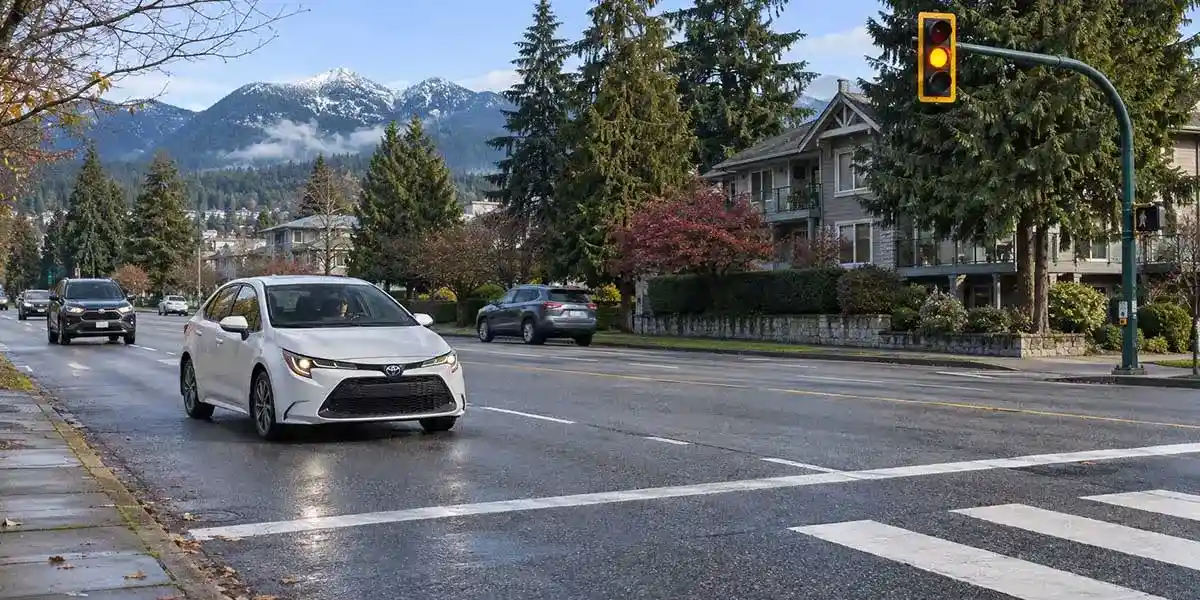
| Yellow light before entering | Stop unless stopping safely is impossible | Avoid accelerating to beat the light | Entering too late |
| Yellow light while waiting inside | Complete the turn when safe | Check oncoming vehicles before moving | Opposing drivers accelerating |
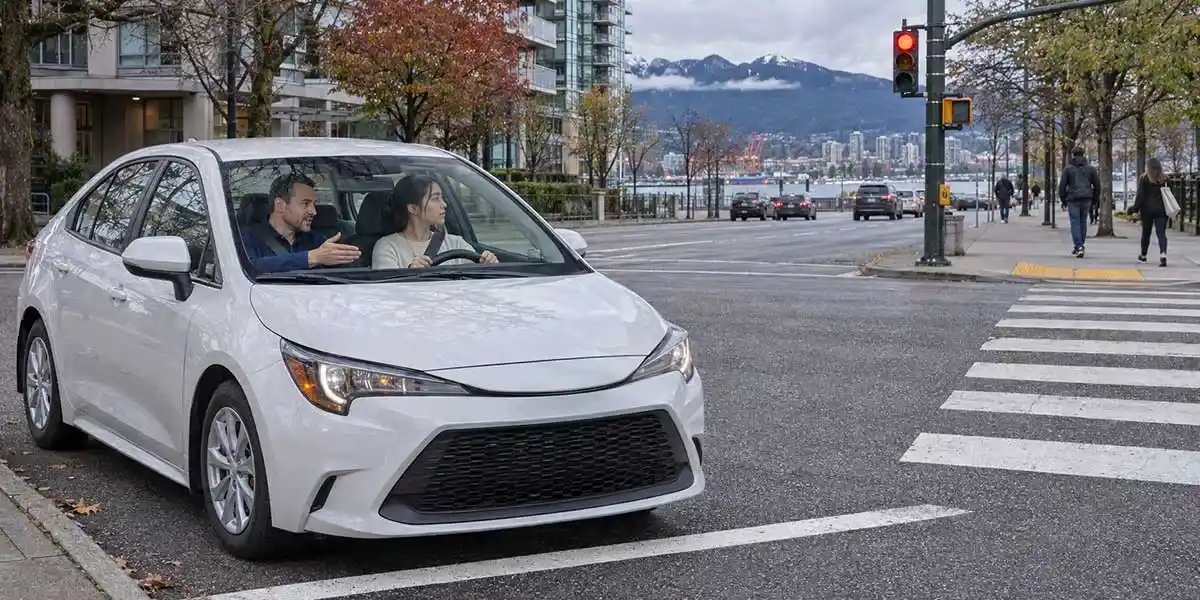
| Red light before entering | Stop; limited exceptions apply | Follow BC red-light turning restrictions | Illegal entry |
| View blocked by vehicles | Never assume the opposite lanes are clear | Wait until approaching traffic is visible | Hidden motorcycles or vehicles |
| Pedestrians crossing | Yield as required | Wait until the intended path is clear | Crossing conflicts |
| Heavy traffic beyond the intersection | Do not block the intersection | Confirm there is space to complete the turn | Becoming trapped in traffic |
Remember: A green signal gives permission to proceed under applicable rules. It does not guarantee that every potential conflict has disappeared.
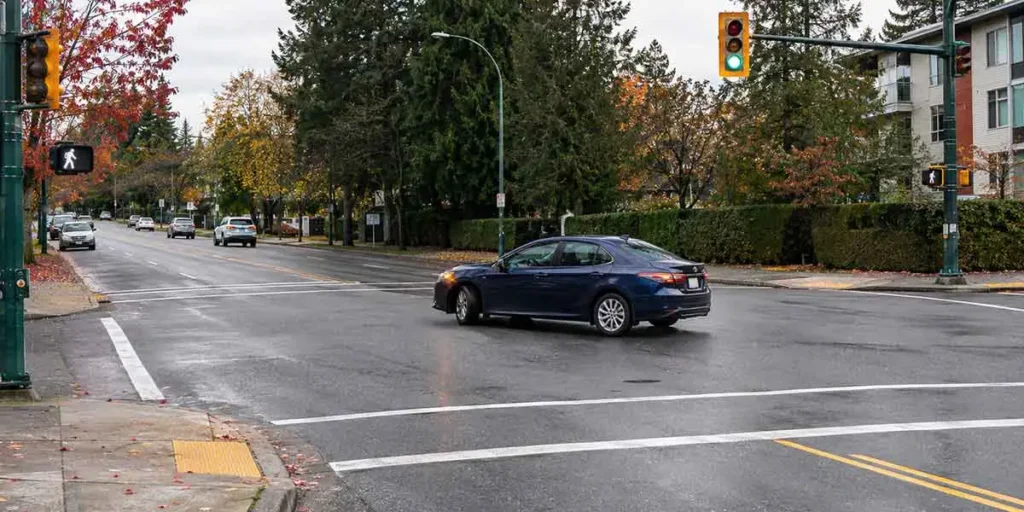
How to Make a Left Turn at an Intersection Step by Step
Learning how to make a left turn at an intersection starts before reaching the intersection itself.
Choose the Correct Lane and Signal Early
Identify the appropriate left-turn lane using road markings and signs. Check your mirrors and blind spot before changing lanes, signal your intention, and adjust your speed smoothly. Approach in the correct position. Avoid last-second lane changes or crossing solid lane markings to reach a turning lane.
Check Oncoming Traffic, Pedestrians, and Cyclists
Scan the intersection before committing to the turn.
Pay particular attention to:
- Oncoming vehicles traveling straight or turning right.
- Pedestrians using the crosswalk you intend to enter.
- Cyclists and other road users who may be harder to notice.
- Traffic signals, lane markings, and turning restrictions.
Look beyond the nearest approaching vehicle. A second lane may contain faster-moving traffic that is not immediately visible.
Wait for a Safe Gap and Complete the Turn
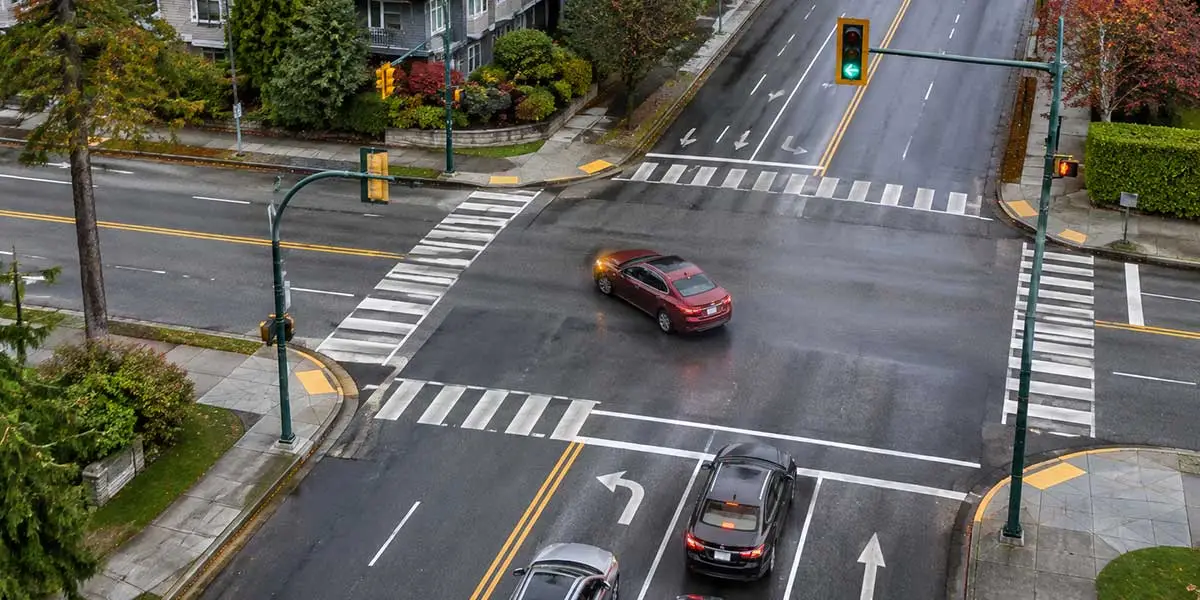
At an ordinary green light, yield to approaching vehicles that present a hazard. If permitted and appropriate, move into the intersection while waiting, keeping your wheels straight. Maintain enough room to complete the turn. When the path is clear, steer smoothly into the correct lane and accelerate appropriately. Avoid cutting across the center of the intersection or drifting into an adjacent lane.
Left-Turn Right-of-Way Rules in British Columbia
BC’s Motor Vehicle Act establishes how drivers must position their vehicles and yield when turning left. Understanding these rules helps prevent dangerous assumptions at busy intersections.
Turning Left at Green, Yellow, and Red Lights
- Green: You may turn when permitted, but must yield to approaching traffic and pedestrians as required.
- Yellow: Stop before entering unless you cannot stop safely. If you are already legally waiting inside the intersection, you may complete your turn when safe.
- Red: Normally, you must stop before entering. BC permits certain left turns onto one-way streets after a complete stop, provided there is no prohibition, and you yield appropriately.
These exceptions do not permit an ordinary left turn across opposing traffic on red.
Protected vs. Unprotected Left Turns
A protected left turn uses a dedicated green arrow, allowing movement while conflicting through traffic is stopped. An unprotected turn occurs when opposing vehicles may still travel through the intersection. For unprotected turns, your decision depends on visibility, approaching traffic, pedestrian activity, and whether a safe gap exists.
Never assume an approaching driver will slow down simply because your signal is changing.
How to Make a Left Turn at Busy Intersections With Limited Visibility
Understanding how to make a left turn involves recognizing when visibility is insufficient to make a reliable decision.
Dealing With Oncoming Vehicles Blocking Your View
Imagine turning left across two opposing lanes. A large vehicle in the nearest lane stops, but you cannot see the lane behind it.
Do not turn based on the first driver’s behavior.
A motorcycle or another vehicle may still be approaching in the hidden lane.
Wait until you can assess the full path of travel. Never rely on another driver’s wave as proof that the intersection is clear.
When to Wait Instead of Turning
Waiting is the safer decision when:
- Approaching vehicles are hidden or moving unpredictably.
- Pedestrians remain in the intended turning path.
- The receiving lane is blocked.
- You cannot accurately judge the available gap.
Being delayed is preferable to making a turn that requires another driver to brake suddenly.
Common Left Turn Driving Test Mistakes to Avoid
A left turn driving test assessment examines observation, vehicle positioning, traffic judgment, and control—not simply whether you completed the maneuver.
Incorrect Lane Positioning and Poor Observation
Common mistakes include approaching from the wrong lane, entering an incorrect receiving lane, and failing to check surrounding traffic. Some learners focus entirely on approaching cars and overlook pedestrians or cyclists. Develop a consistent observation habit before every turn, including mirror and shoulder checks where required.
Rushing the Turn or Misjudging Oncoming Traffic
Pressure from vehicles waiting behind you can encourage unnecessary risks. Other mistakes include turning before an approaching vehicle clears, following another turning driver without independently checking traffic, and accelerating abruptly. During the test, demonstrate patient judgment and controlled steering instead of attempting to complete every possible turn.
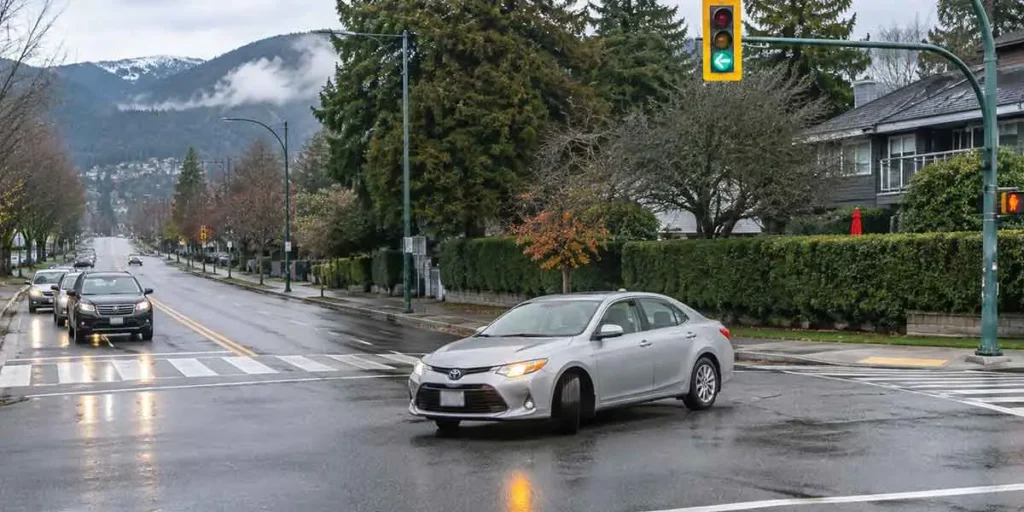
How to Practice Safe Left Turns Before Your ICBC Road Test
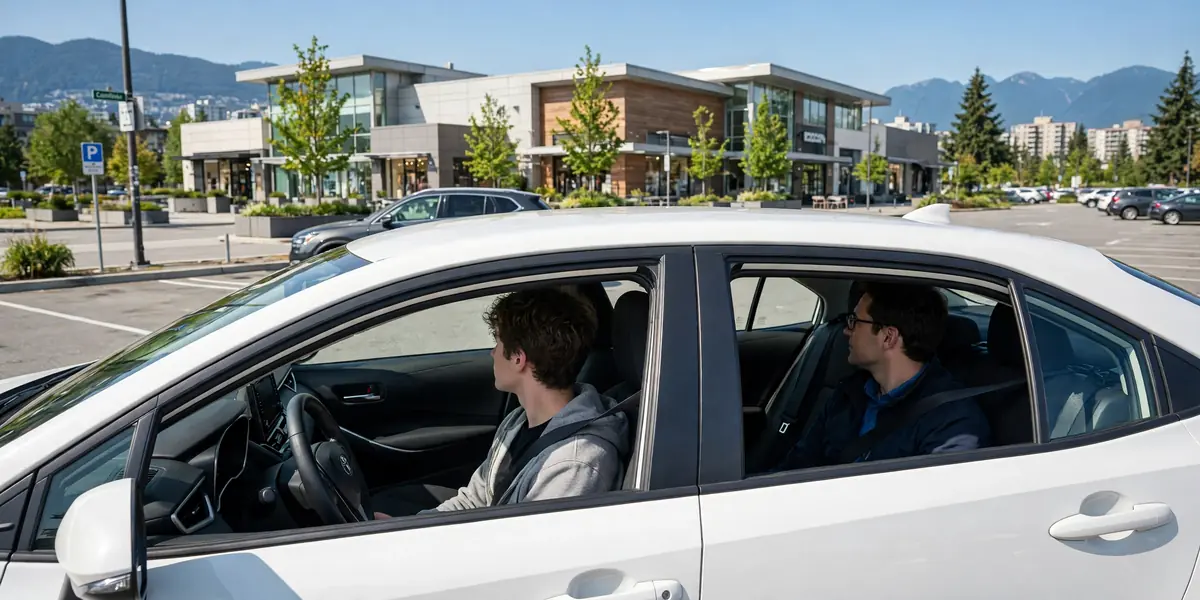
Begin practicing at quiet intersections with clear visibility before progressing to busier roads. Focus on one skill at a time: lane positioning, observation, gap judgment, and smooth vehicle control.
Practice with an authorized supervisor or qualified instructor in conditions appropriate to your experience.
At Seymour Driving School, instructors provide personalized training across North Vancouver, West Vancouver, Vancouver, and Burnaby, helping learners develop confidence through practical instruction. A useful exercise is to explain what you see while approaching an intersection, then discuss whether waiting or proceeding was the safer choice.
Left Turns vs. Roundabouts: Understanding the Difference
Traditional intersections and roundabouts require different approaches to traffic movement. At a signal-controlled intersection, turning left may involve crossing opposing traffic while observing signal phases.
At a roundabout, drivers generally yield to traffic already circulating and follow the designated direction around the central island. Lane selection, signs, and pedestrian crossings still require careful attention. For a related visual demonstration, review Seymour’s driving tutorials covering roundabout rules bc.
Frequently Asked Questions
When Can You Turn Left at an Intersection?
You can turn when the signal or traffic controls permit the movement, you have yielded where required, and the intended path is safe. At an ordinary green light, approaching vehicles and pedestrians may still have priority.
Can You Turn Left on Red at an Intersection?
In BC, certain left turns onto one-way streets are permitted after a complete stop, unless prohibited by a sign or signal. You must yield to pedestrians and other traffic. Ordinary left turns across opposing traffic are not permitted on red.
How to Do a Left Turn at an Intersection?
Choose the correct lane, signal, observe surrounding traffic, and assess the available gap. Yield where required, then turn smoothly into the appropriate lane without cutting across other vehicles’ paths.
Why Is It Dangerous to Turn Left at an Intersection?
Left turns may cross the paths of approaching vehicles, cyclists, and pedestrians. Limited visibility and inaccurate speed judgments increase collision risk, especially at busy multi-lane intersections.
Can You Pull Into the Intersection When Turning Left?
Yes. On a permitted green signal, ICBC guidance allows drivers to move into the intersection and wait for oncoming traffic to clear. Stop before the center, keep your wheels straight, and complete the turn only when safe. Never back up to escape the intersection.