Hazard perception is the ability to recognize potential dangers on the road before they become immediate threats. It helps drivers anticipate unexpected movements, make safer decisions, and avoid preventable collisions. For new drivers in British Columbia, developing this skill is an important part of icbc road test preparation. Understanding what to look for, and how to respond, can make everyday driving safer and less stressful.
Quick Reference Table: Hazard Perception in BC Driving
The table below highlights common driving hazards, the warning signs to recognize, and the safest response in each situation.
| Driving Hazard | Early Warning Signs | Potential Risk | Recommended Driver Response |
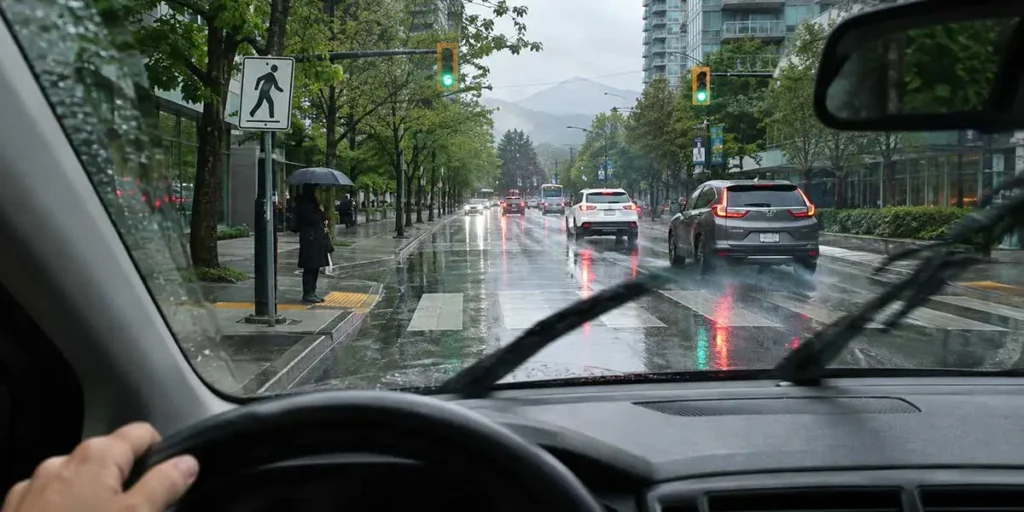
| Pedestrians | Someone approaching a crosswalk or standing between parked vehicles | A person entering the roadway unexpectedly | Reduce speed, scan both sides, and prepare to yield |
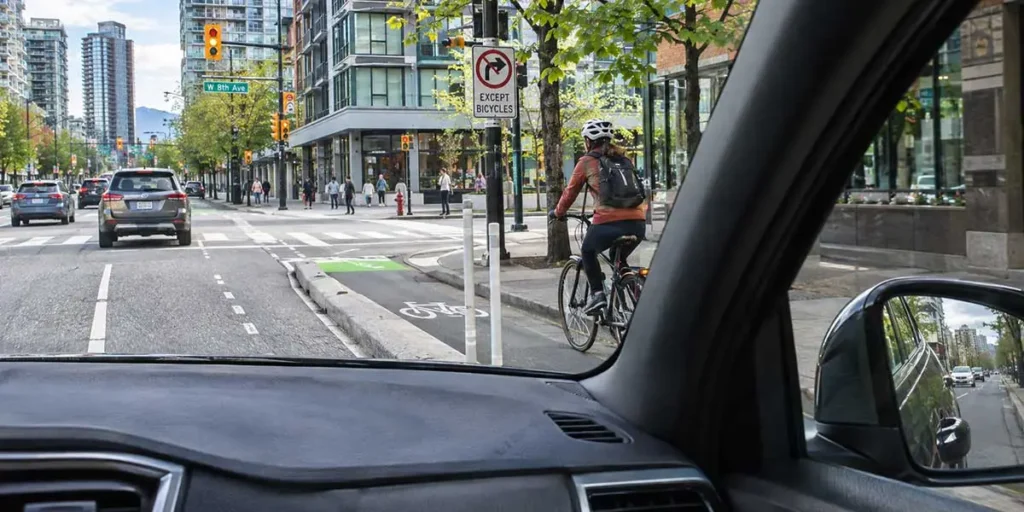
| Cyclists | A bicycle approaching an intersection or travelling beside parked cars | Sudden lane movement or a turning conflict | Allow space, check blind spots, and avoid cutting across their path |
| Hidden driveways | Limited visibility caused by hedges, buildings, or parked vehicles | A vehicle pulling into traffic unexpectedly | Scan openings and maintain a speed that allows a safe response |
| Intersections | Obstructed sightlines, turning vehicles, or approaching pedestrians | Right-of-way conflicts or collisions | Scan thoroughly and proceed only when the path is clear |
| Wet roads | Rain, standing water, or reduced tire grip | Longer stopping distances and reduced control | Increase following distance and brake smoothly |
| Parked vehicles | Brake lights, movement inside a vehicle, or an opening door | A door opening or vehicle entering your path | Maintain clearance and adjust speed when necessary |
What Is Hazard Perception in Driving?
Hazard perception in driving means identifying conditions that could affect your safety and predicting how they might develop. A hazard does not have to be dangerous at the moment you notice it.
For example, a pedestrian standing beside a crosswalk may remain on the sidewalk or begin crossing. Recognizing both possibilities gives you time to respond appropriately. This skill involves more than looking at the road. It requires understanding what other road users might do, recognizing restricted visibility, and adjusting your driving before a situation becomes critical. Good drivers continuously assess their surroundings rather than reacting only when something goes wrong.
How Do Hazard and Perception Work Together on the Road?
Hazard and perception work together through observation, anticipation, and decision-making. ICBC teaches these skills using the See–Think–Do approach:
- See: Scan ahead, check mirrors, and identify anything that could create danger.
- Think: Consider how the situation might change and what actions could keep everyone safe.
- Do: Respond appropriately by adjusting speed, positioning, or following distance.
Imagine approaching a parked delivery van near a busy crosswalk. You cannot see what is behind it, but you recognize that someone could step into the road. Instead of waiting for a pedestrian to appear, you reduce speed and prepare to stop.
How Does ICBC Assess Hazard Perception During a Road Test?
During an ICBC passenger-vehicle road test, the examiner assesses whether you recognize potential risks and maintain safe observation habits. You may be asked to identify hazards aloud while driving. Examples include hidden driveways, pedestrians, cyclists, children near the road, and vehicles that could enter your path.
This is not the same as the computerized video-based hazard perception tests used in some other countries. ICBC evaluates awareness in real driving conditions.
Important 2026 update: Since October 19, 2026, eligible Class 7 novice drivers can upgrade to Class 5 through a Driving Record Assessment rather than a second road test. Class 7 road tests and other applicable practical tests remain in place.
Drivers can still benefit from class 5 driving lessons to strengthen advanced observation, defensive driving, and decision-making skills, regardless of whether another road test is required.
Common Driving Hazards to Watch for in British Columbia
BC roads present different challenges depending on traffic, visibility, weather, and surrounding activity. Recognizing early warning signs helps drivers respond without sudden or unnecessary manoeuvres.
Pedestrians, Cyclists and Hidden Driveways
Residential streets require particular attention. Pedestrians may emerge between parked cars, cyclists may approach from blind spots, and vehicles may reverse from concealed driveways. Watch for movement near sidewalks, driveways, and parked vehicles. Reduce speed when visibility is restricted, especially around schools and residential neighbourhoods.
Intersections, Blind Spots and Turning Vehicles
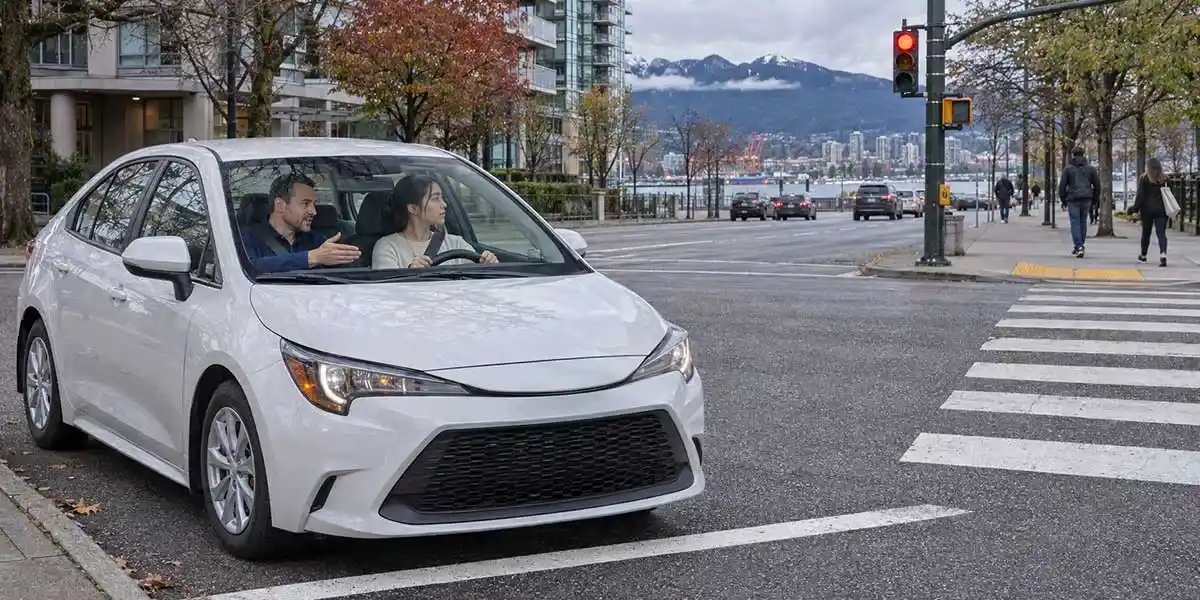
Intersections bring several road users into the same space. Even with a green light, drivers must watch for pedestrians, cyclists, and vehicles completing turns. A safe left turn at intersection requires checking approaching traffic, judging gaps carefully, and confirming that the intended path is clear before turning.
Rain, Poor Visibility and Road Conditions
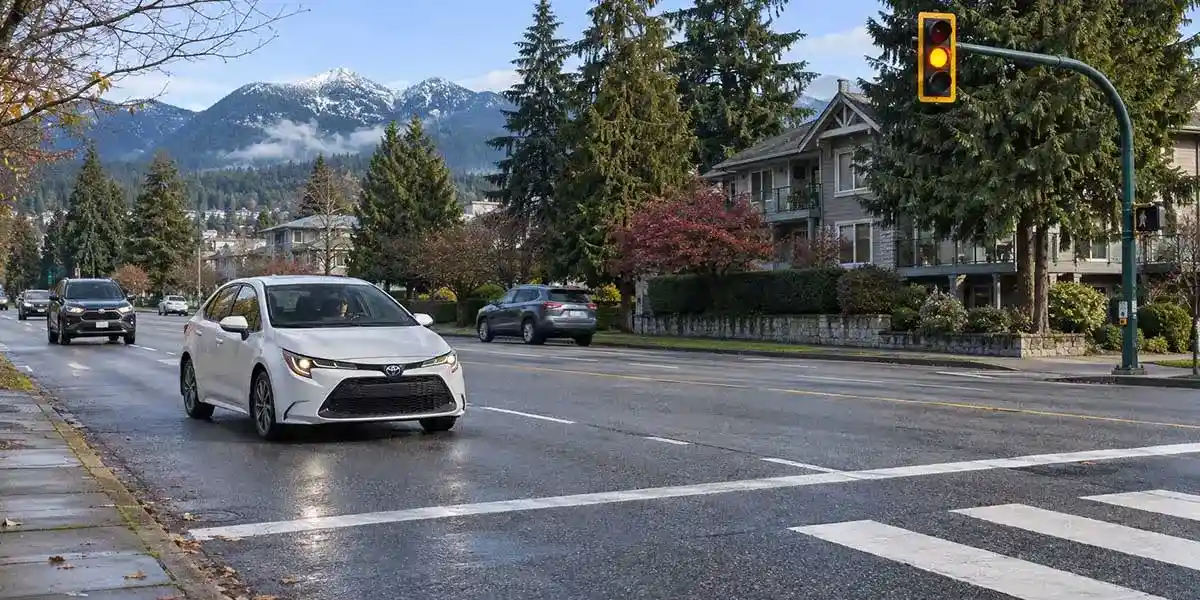
Rain is a frequent driving challenge in Metro Vancouver. Wet pavement reduces traction, while reflections and windshield moisture can make pedestrians and road markings harder to see. Increase your following distance, adjust speed to conditions, and avoid abrupt braking or steering.
Hazard Perception Example: Spotting a Risk Before It Develops
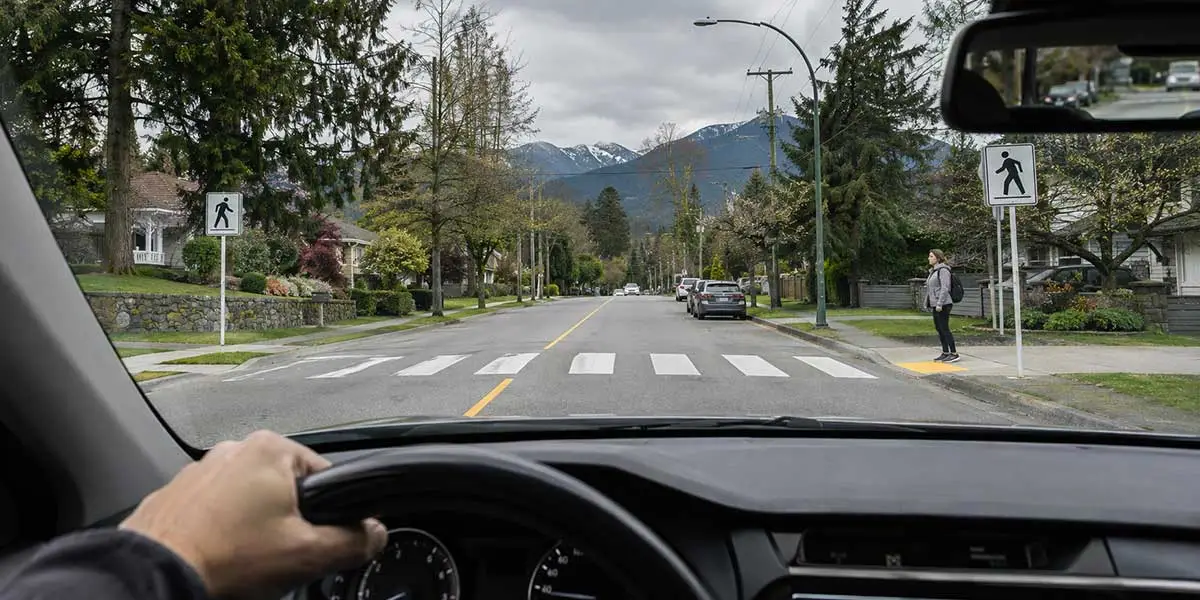
Imagine driving along a residential street in North Vancouver. A large SUV is parked near a pedestrian crossing, partially blocking your view of the sidewalk.
- Step 1 — Identify the hazard: The SUV creates a blind spot where a pedestrian could be hidden.
- Step 2 — Anticipate the risk: Someone might step into the crosswalk without being visible until the last moment.
- Step 3 — Respond safely: Reduce speed, scan the surrounding area, and prepare to stop if necessary.
- Step 4 — Reassess: Continue only when you can confirm that proceeding is safe.
The important lesson is simple: the SUV itself is not necessarily dangerous. The uncertainty created by the obstructed view is the hazard.
How to Practise Hazard Perception Before Your ICBC Road Test
Improving this skill requires consistent practice in varied driving environments. The goal is to recognize risks early without becoming excessively cautious or distracted.
Build a Consistent Scanning Routine
Look well ahead rather than concentrating only on the vehicle directly in front of you. Regularly check mirrors, intersections, sidewalks, and areas with limited visibility. Practise scanning while maintaining appropriate speed, lane position, and following distance.
Practise Identifying Hazards Out Loud
During supervised driving, describe potential hazards in short, clear phrases:
- “Pedestrian approaching the crosswalk.”
- “Driveway hidden behind the hedge.”
- “Cyclist travelling beside parked cars.”
Keep your attention on driving. Brief identification is more useful than lengthy explanations. For structured feedback, Seymour Driving School offers driving instruction focused on practical observation and safe decision-making in Metro Vancouver.
Use Free Hazard Perception Resources
Free hazard perception practice can begin with ICBC’s official Learn to Drive Smart and Tuning Up for Drivers resources. Passengers can also practise recognizing hazards while another person drives. This develops visual awareness without the additional demands of vehicle control. Online driving scenarios may support learning, but they should not replace supervised practice in real traffic.
Conclusion: Develop Safer Driving Habits Through Better Awareness
Strong hazard awareness helps drivers recognize uncertainty, anticipate potential dangers, and respond calmly. Whether preparing for an ICBC road test or improving everyday driving skills, regular observation and practical experience build confidence and support safer decisions on British Columbia’s roads.
Frequently Asked Questions
What Is a Hazard Perception Test?
A hazard perception test evaluates your ability to recognize potential dangers and anticipate how road situations might develop.
In British Columbia, hazard awareness forms part of practical driving assessment rather than a separate computerized video test for passenger-vehicle applicants.
During an applicable ICBC road test, the examiner may ask you to identify hazards while driving. Your overall observation, judgement, and response to road conditions also matter.
What Are Hazards in a Hazard Perception Test?
Hazards are anything in the driving environment that could create a safety risk.
Examples include pedestrians approaching crossings, cyclists near turning vehicles, hidden driveways, obstructed intersections, slippery pavement, and vehicles behaving unpredictably.
Some hazards are visible and immediate. Others are potential risks that require anticipation.
An effective driver recognizes both types and adjusts appropriately without unnecessary braking or hesitation.
How Can I Improve My Hazard Perception Skills for the ICBC Road Test?
Start by developing a consistent scanning routine and practising in different road environments, including residential streets, intersections, and areas with pedestrian or cyclist activity.
Ask a qualified instructor or supervising driver to help you recognize risks you might overlook.
Practise identifying hazards aloud, maintaining safe following distances, and adjusting speed before approaching areas with reduced visibility.
Review ICBC’s official driver-training resources and apply those principles during supervised practice. Consistency matters more than memorizing specific test routes.