Getting a driver’s licence is an important step toward independence for newcomers settling in British Columbia. If you have driving experience in Afghanistan, you may be able to use it when applying for a BC licence, but you must meet ICBC requirements. Understanding the process early can help you avoid delays and unnecessary costs. You can also explore class 5 driving lessons Vancouver to prepare for local driving conditions and the road test.
BC Driver’s Licence Requirements for Afghan Newcomers at a Glance
| Licensing Requirement | What Afghan Newcomers Need to Know |
| Foreign licence validity | New BC residents can generally drive with a valid Afghan licence for up to 90 days after moving. |
| Direct licence exchange | Afghanistan has no direct exchange agreement with BC. |
| Knowledge test | Required for holders of Afghan licences. Passing score: 40 out of 50 questions (80%). |
| Road test | Required after qualifying on the knowledge test. The applicable licence class depends on ICBC’s assessment. |
| Licence translation | Required for Afghan licences and must be completed by an ICBC-approved translator. |
| Identification | One accepted primary ID and one secondary ID. |
| Driving experience | At least two years of documented non-learner experience may qualify you for exemption from graduated licensing. |
| Missing experience records | You may need to enter BC’s Graduated Licensing Program (GLP). |
| Language assistance | Knowledge tests are available in several languages, including Farsi. Other languages may require an approved interpreter. |
| Where to apply | An ICBC driver licensing office in British Columbia. |
Can You Drive in BC With an Afghan Driver’s Licence?
Yes. If you hold a valid Afghan driver’s licence, you can generally drive in British Columbia for up to 90 days after becoming a resident. During this period, you should begin applying for a BC licence rather than waiting until your foreign driving privileges expire. Your licence must be valid for the vehicle you intend to drive. You must also follow BC traffic laws and carry the required driving documents.
For newcomers unfamiliar with local requirements, our guide to BC driving rules for foreign drivers explains important differences in road signs, intersections and driving practices.
How Long You Can Use Your Afghan Licence After Moving to BC
The 90-day period generally begins when you establish residency in British Columbia, not when you first enter Canada. Certain visitors and eligible full-time students have different rules. If you are moving permanently to BC, however, you should arrange your ICBC appointment as soon as possible.
Can an Afghan Driver’s Licence Be Exchanged for a BC Licence?
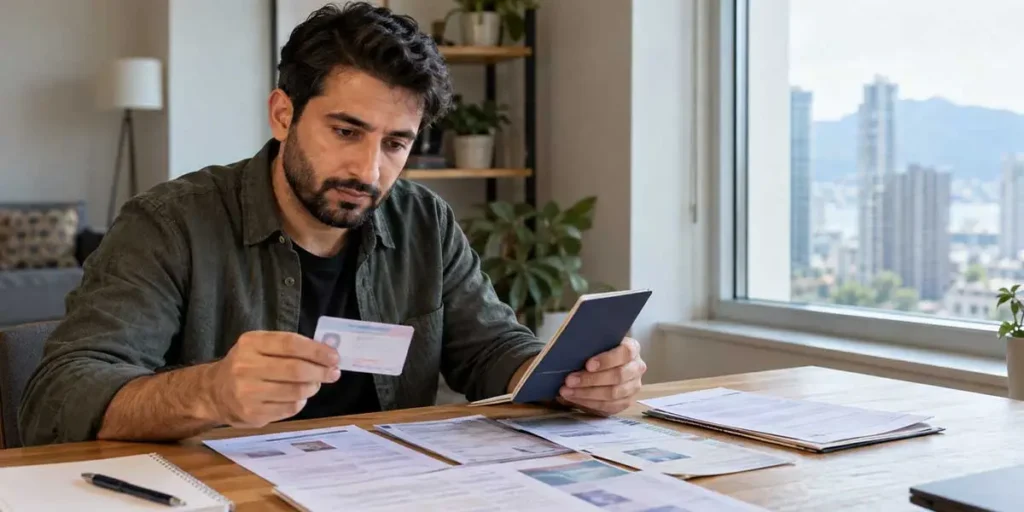
An Afghan driver’s licence in BC cannot be exchanged directly without testing because Afghanistan is not among ICBC’s recognized licence-exchange jurisdictions. However, your existing licence and documented driving history can still help determine which BC licensing process applies to you. ICBC reviews your identification, licence validity and previous driving experience before determining your eligibility.
When Knowledge and Road Tests Are Required
Drivers applying with an Afghan licence must generally complete two examinations:
- Knowledge test: A 50-question multiple-choice examination covering road signs, traffic regulations and safe driving. You need at least 40 correct answers to pass.
- Road test: A practical assessment of vehicle control, observation, decision-making and safe driving in traffic.
Applicants with sufficient verified experience may qualify for a Class 5 road test. Others may need to follow graduated licensing requirements.
What Documents Do Afghan Newcomers Need for a BC Driver’s Licence?
Preparing your documents before visiting ICBC can prevent delays. The Canadian driver’s licence for Afghan immigrants is issued through BC’s provincial licensing system, and ICBC determines whether the submitted documents meet its requirements.
Identification, Licence Translation and Proof of Driving Experience
You should prepare:
- Primary identification: An ICBC-accepted document, such as an eligible Canadian immigration document.
- Secondary identification: Another document from ICBC’s accepted ID list.
- Original Afghan driver’s licence: Your current licence for review.
- Approved English translation: Required for Afghan licences.
- Driving experience record: An original official record or letter, if needed to establish your first licensing date.
- Applicable licensing fees: Payment for the required services and examinations.
Experience letters must identify the licensing authority and include relevant personal details, licence class and original issue date.If obtaining records from Afghanistan is difficult, speak with ICBC before your appointment about what evidence you have available.
How Does Your Previous Driving Experience Affect the Licensing Process?
Previous driving experience can make a significant difference to your licensing pathway. ICBC considers how long you have held a full-privilege licence, not simply how many years you have driven a vehicle.
What Happens If You Can or Cannot Prove Two Years of Experience
If you can prove at least two years of eligible experience:
You may qualify for an exemption from BC’s Graduated Licensing Program. You will still need to complete the required tests because Afghanistan does not have a direct licence-exchange agreement with BC.
If you cannot prove two years:
ICBC may place you in the Graduated Licensing Program, where learner or novice restrictions apply according to your eligibility.
Official records can also help ICBC recognize previous driving experience for insurance purposes. Keep your original documents even if you have already started your application.
How to Prepare for the ICBC Knowledge and Road Tests
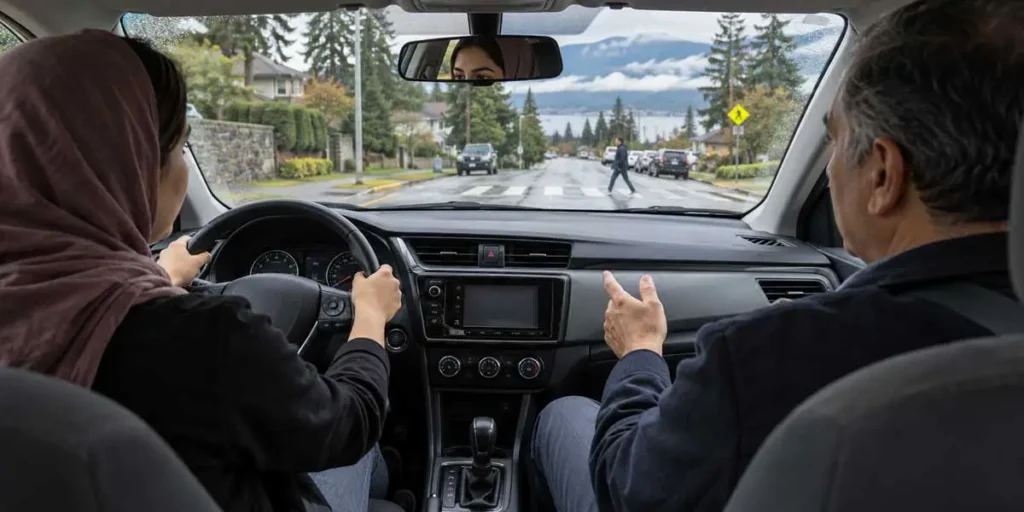
Passing your tests requires more than remembering traffic signs. You need to understand how BC traffic rules work in everyday situations and demonstrate consistent, safe driving decisions. Begin with ICBC’s official Learn to Drive Smart guide. Study road signs, right-of-way rules, speed limits, intersections and pedestrian safety before attempting practice questions.
BC Driving Rules, Local Road Habits and Road Test Preparation
Drivers with experience in Afghanistan may already have good vehicle-control skills. However, adapting to BC’s road expectations is equally important.
Focus on these areas during practice:
- Complete stops at stop signs and red lights.
- Mirror checks and shoulder checks before changing lanes.
- Pedestrian and cyclist awareness at intersections.
- Proper right-of-way decisions at four-way stops.
- Speed control in school zones and residential areas.
- Safe driving in rain, limited visibility and busy traffic.
At Seymour Driving School, we provide personalized driving instruction for newcomers throughout North Vancouver, West Vancouver, Vancouver and Burnaby. Our instructors assess each student’s existing skills and focus lessons on areas that need improvement, helping experienced drivers adjust to BC roads without repeating skills they already know.
What Should Afghan Newcomers Do First After Arriving in BC?
For Afghan newcomers BC driver’s licence requirements become easier to manage when you follow a clear sequence:
- Check your licence: Confirm that your Afghan licence is valid and review the 90-day residency rule.
- Organize your documents: Prepare identification, an approved translation and available driving history.
- Contact ICBC: Confirm your eligibility and book a knowledge test appointment.
- Study BC driving rules: Use ICBC’s official resources and practice questions.
- Prepare for your road test: Take driving lessons if you need help adapting to local traffic conditions.
- Complete your licensing process: Follow ICBC’s instructions for your assigned licence class.
If you do not have an Afghan licence, or your licence has expired, contact ICBC to confirm the appropriate first-time licensing process. The goal is not simply to pass a test. It is to develop the knowledge and confidence needed to drive safely in your new community.
Frequently Asked Questions
How can Afghan immigrants apply for a Canadian driver’s licence?
Afghan immigrants living in BC can apply through ICBC. They generally need accepted identification, their Afghan licence and an approved translation, followed by the required knowledge and road tests.
What’s the hardest country to get a driver’s license in?
There is no universally recognized hardest country. Licensing difficulty varies according to testing standards, training requirements and local regulations. In BC, ICBC assesses drivers against provincial safety standards.
How do I convert my foreign driver’s license to a Canadian license?
The process depends on the province and the country that issued your licence. In British Columbia, Afghan licence holders generally need to pass knowledge and road tests rather than complete a direct exchange.
What are the required documents for Afghan newcomers to get a driver’s licence in Canada?
In BC, you generally need accepted primary and secondary identification, your current foreign licence, an ICBC-approved translation, available driving experience records and the required fees.
Where can I get my foreign driver’s license translated for use in Canada?
For a BC licence application, use an ICBC-approved translator. ICBC provides information about approved translators and document requirements on its official website.