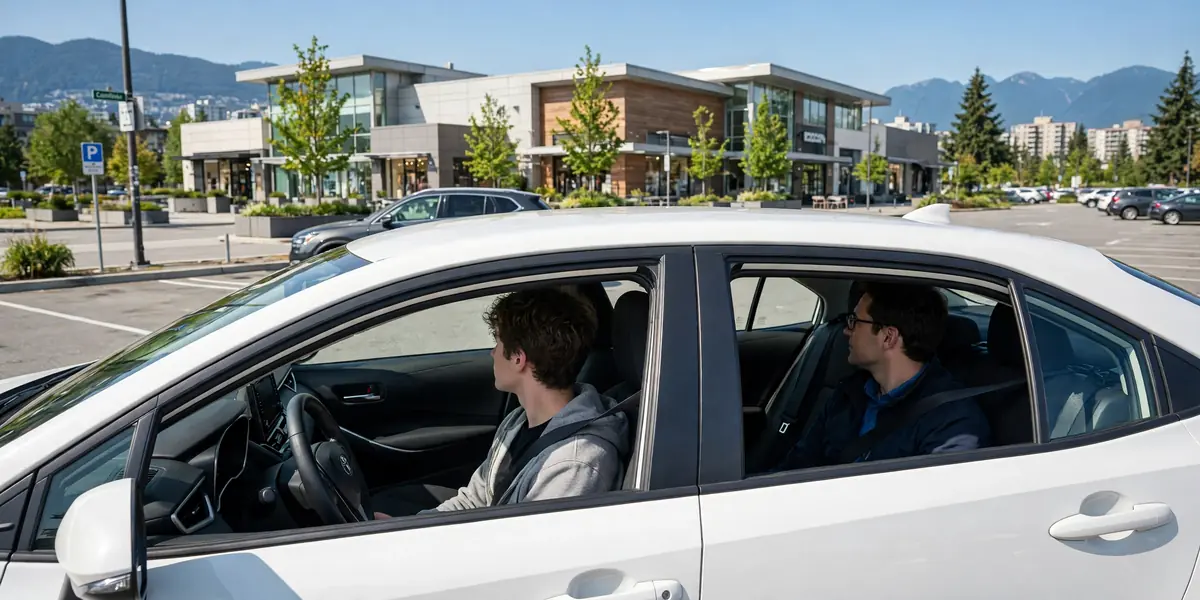
You are sitting in a parked car in a busy Vancouver lot, reverse lights on, and a car is coming down the lane. Do you go, or do you wait? When backing out of a parking stall BC drivers face every day, the answer is simple: the driver already moving in the lane has the right of way, and you must wait until it is safe. This habit is built early in icbc road test preparation, because examiners watch how you check, wait, and reverse.
At Seymour Driving School, instructors teach reversing as a slow, deliberate skill. The rule applies across British Columbia.
| Situation | Who has the right of way? | What you should do |
|---|---|---|
| You reverse out; a car drives down the lane | The car in the lane | Wait until the lane is clear |
| You reverse out; a pedestrian walks behind you | The pedestrian | Stop and let them pass |
| Two cars reverse out at the same time | Neither has priority | Stop, check again, move only when clear |
| You leave the lot onto a street | Traffic already on the street | Stop before the sidewalk, yield to pedestrians, then to street traffic |
The Short Answer: The Driver in the Lane Has the Right of Way
When you back out of a parking stall, you do not have the right of way. The vehicle already travelling in the parking lane does. That is the question behind who has right of way in a parking lot BC searches, and it is the rule most new drivers get wrong, because it feels unfair: you are ready, your reverse lights are on, and the other driver can see you. Visibility does not change the rule.
The same applies to anyone entering the lane from a stall or driveway. If a collision happens while you are reversing out of a parking space BC lots share, ICBC generally finds the reversing driver at fault.
What BC Law Actually Says About Reversing
British Columbia’s Motor Vehicle Act is direct. Section 193 says a driver must not cause a vehicle to move backwards into an intersection or over a crosswalk, and must not, in any event or at any place, cause a vehicle to move backwards unless the movement can be made in safety.
Section 176 covers leaving a parking lot, driveway, lane, or private road. Before driving onto a sidewalk area, you must stop and yield to pedestrians. Before entering a highway, you must yield to traffic close enough to be an immediate hazard. A parking lot is usually private property, but fault is still assessed if a collision happens there.
Who Yields to Whom in a Parking Lot
Picture two kinds of lanes: the main lane carries traffic through the lot, while a feeder lane leads into a row of stalls. A driver in a feeder lane should yield to a driver already in the main lane. A driver leaving a stall should yield to everyone already moving, and to pedestrians. That is the core of parking lot right of way BC rules.
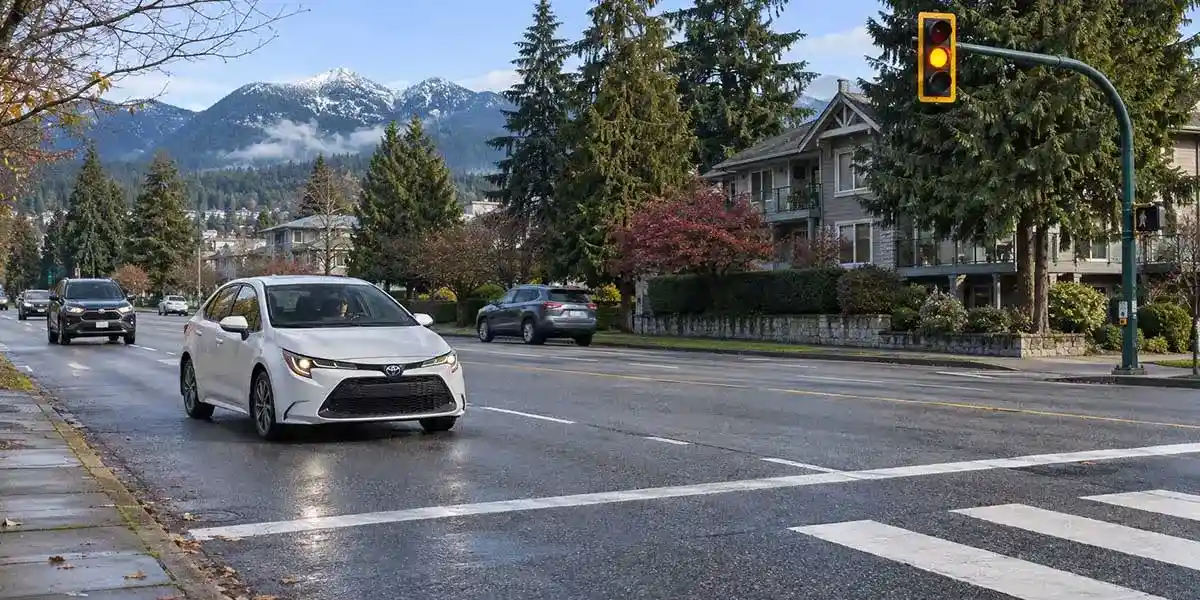
If two cars reverse out at the same time and collide, fault is usually shared. If another driver waves you out, treat that as a courtesy, not a guarantee. Just as yellow traffic light rules tell you to stop when you can do so safely rather than speed through, having the right of way does not mean you should drive past a reversing car at speed. Slow down and give the other driver room to stop.
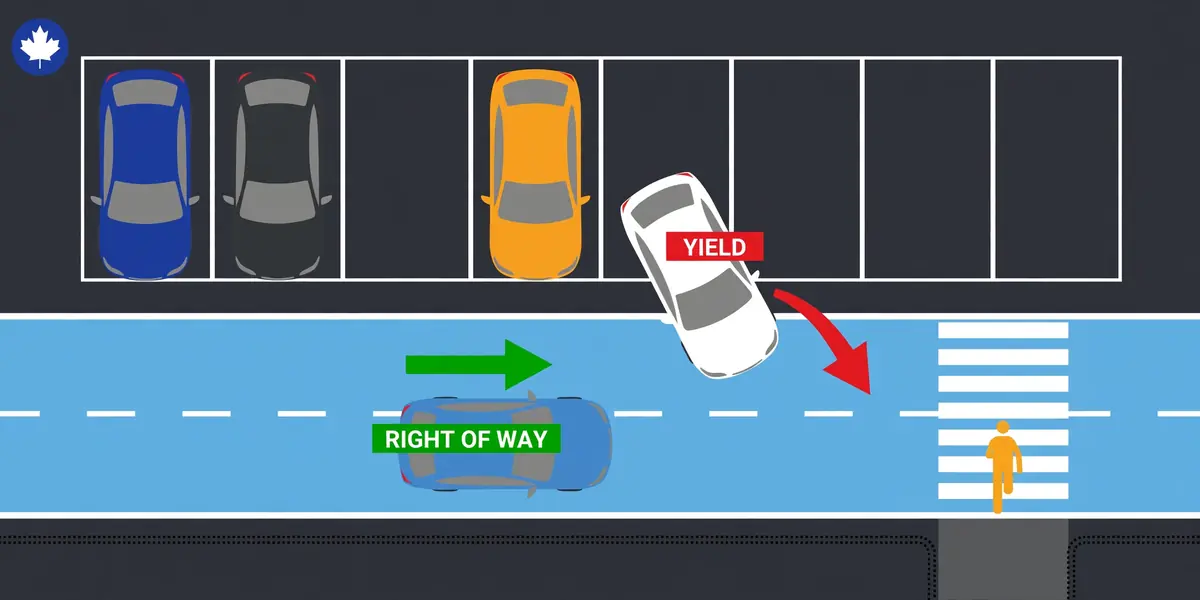
How to Back Out of a Parking Stall Safely, Step by Step
Use the same calm routine every time, even in an empty lot. First, do a 360-degree check: look through the rear window, check both mirrors, and glance over your right shoulder for pedestrians, carts, and cars approaching from either side.
Next, shift into reverse only when you are ready to move. Keep your left hand at the top of the steering wheel, look mainly through the rear window, and move at walking speed, or slower. If anything changes, stop. Finally, straighten up as soon as you are clear, shift out of reverse, and drive forward slowly.
Book Your Driving Lesson if reversing still feels rushed. A short practice session in a quiet lot, with an instructor beside you, can turn a stressful manoeuvre into a routine one.
Why Reversing Into a Stall Is Often the Safer Choice
Many experienced drivers prefer backing into a parking stall BC lots offer, rather than reversing out of one. When you reverse in, you check the space just before you enter it, and nothing in it is moving. When you drive out forward later, you can see the lane and pedestrians clearly.
What This Means on Your ICBC Road Test
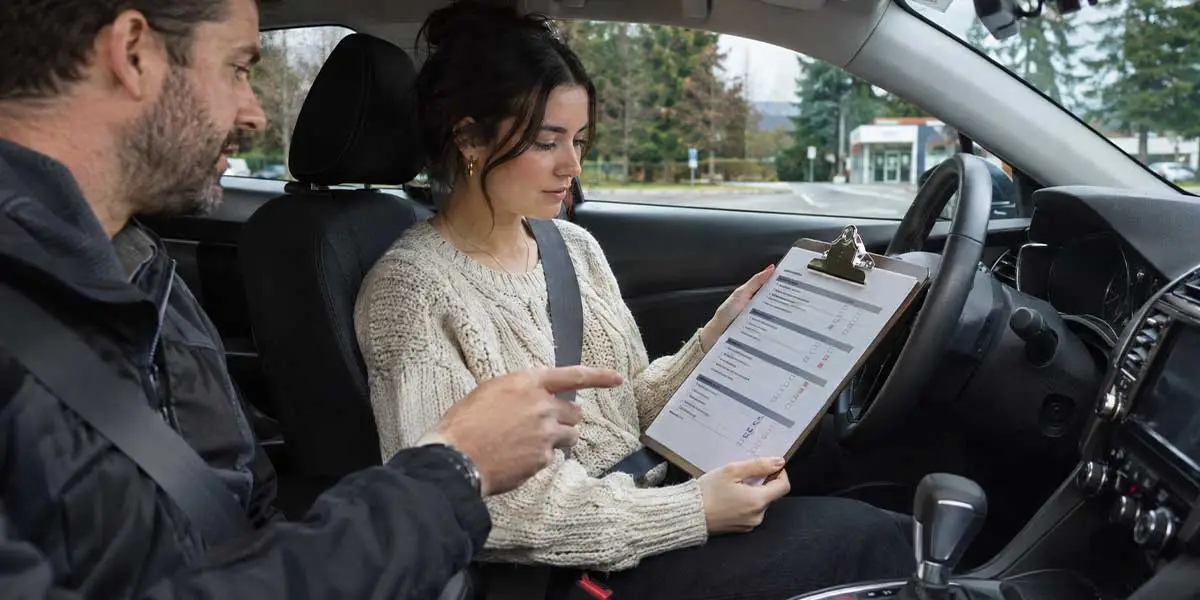
Reversing and stall parking are part of class 5 driving lessons and Class 7 preparation in BC, and examiners score them on observation, control, and safety, not speed. Expect a 360-degree check before you reverse and a look over your right shoulder while you move. Rushing, reversing without checking, or relying only on a backup camera are common errors.
Common Mistakes That Cause Parking Lot Collisions
The most common mistakes are reversing before looking around, trusting mirrors alone, and reversing too fast. If you cannot see the whole path, do not guess. Stop and check again.
Ready to Practise Reversing With Confidence?
Backing out of a parking stall is a small manoeuvre with a big lesson: the driver who is already moving has the right of way, and the driver who is reversing has the responsibility. Check all around, wait for a clear gap, and reverse slowly. To practise with a patient instructor in Vancouver, North Vancouver, West Vancouver, or Burnaby, book a lesson. Find the Right Lesson Package for your level, and check road test package availability before your test date.
Frequently Asked Questions
Do I have the right of way when I am backing out of a parking stall in BC?
No. The driver already travelling in the parking lane has the right of way. You must yield and reverse only when the lane is clear.
Who is at fault if I reverse into a car driving past in a parking lot?
In most cases, the reversing driver. ICBC’s crash examples generally find the reversing driver 100% at fault in that situation.
Do pedestrians have the right of way in a parking lot?
Yes, in practice. You must yield to pedestrians, and a driver who hits a pedestrian in a lot is usually presumed at fault.
Should I reverse into a parking stall instead?
Often, yes. Reversing in lets you check an empty space first, and you can then drive out forward with a clear view.
Does the Motor Vehicle Act apply in a private parking lot?
The lot is private property, but the duty in section 193, do not reverse unless the movement can be made in safety, applies at any place.