Winter driving in British Columbia can be unpredictable, especially when rain turns into snow or temperatures drop overnight. Understanding how weather affects traction is an important part of becoming a confident driver. Alongside ICBC road test preparation, learning to recognize winter hazards helps drivers make safer decisions beyond the driving test.
Snow-covered roads require more than simply reducing speed. Safe driving depends on tire condition, visibility, road awareness, and knowing how your vehicle responds when traction decreases.
In Metro Vancouver, a wet road can become icy within a short distance, particularly on bridges, shaded streets, and elevated roads. Conditions may be considerably more severe on mountain routes. For new drivers, class 7 driving lessons can help establish essential vehicle-control habits before encountering challenging winter conditions. Understanding when to continue, slow down, or cancel a trip is just as valuable as learning how to steer.
Winter Driving Conditions and What Drivers Should Do
| Road Condition | Main Risk | Recommended Driver Response | When to Stop or Avoid Driving |
| Fresh snow | Reduced tire grip | Accelerate gently and increase following distance | When traction becomes unreliable |
| Black ice | Sudden loss of control | Avoid abrupt braking and steering | When roads are extremely slippery |
| Slush | Unpredictable steering response | Reduce speed and avoid sudden lane changes | When the vehicle cannot maintain stable control |
| Snow-covered hills | Wheelspin or sliding | Approach slowly and maintain smooth momentum | When safe climbing or descending is doubtful |
| Heavy snowfall | Limited visibility | Use low-beam headlights and reduce speed | When you cannot see far enough to stop safely |
| Vehicle stuck in snow | Wheelspin and possible exhaust blockage | Clear snow safely and assess traction | When recovery requires unsafe movement or assistance |
This table provides general guidance. Road closures, weather warnings, vehicle capabilities, and driver experience should always influence the decision to travel.
Driving in Snow and Ice: What Makes BC Roads Different?
British Columbia combines coastal temperatures, mountain highways, and rapidly changing elevations. A route that begins with rain in Vancouver may encounter freezing conditions farther inland. Black ice is particularly dangerous because it can resemble wet pavement. Bridges, overpasses, intersections, and shaded areas deserve extra attention, even when nearby roads appear clear.
When driving in snow and ice, never assume that road conditions remain consistent throughout a journey. Check local forecasts and road advisories before leaving. A familiar route can become hazardous after a sudden temperature change.
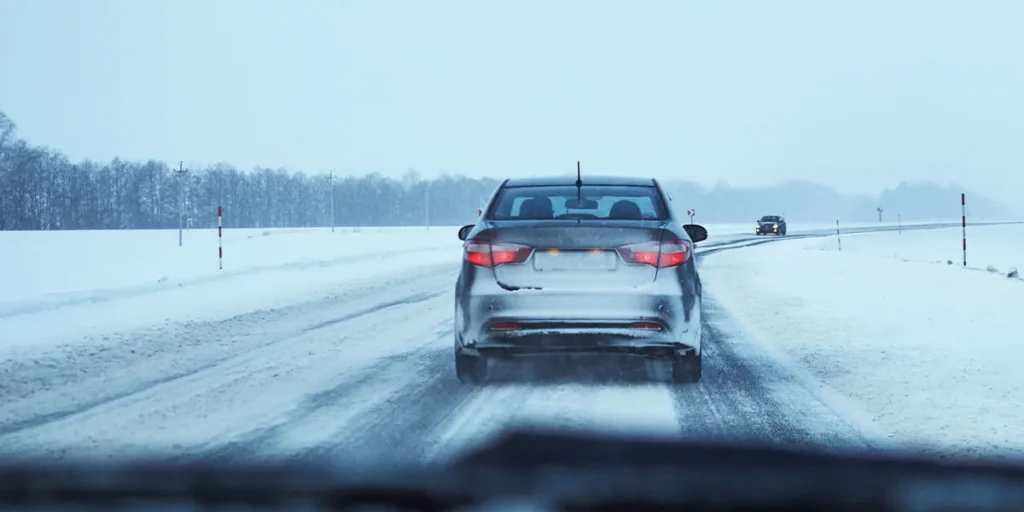
Before Driving in the Snow: Prepare Your Car for Winter
Vehicle preparation is among the most practical tips for driving in snow. Even experienced drivers cannot compensate for unsuitable tires or severely restricted visibility.
Winter Tire Requirements and Road Rules in BC
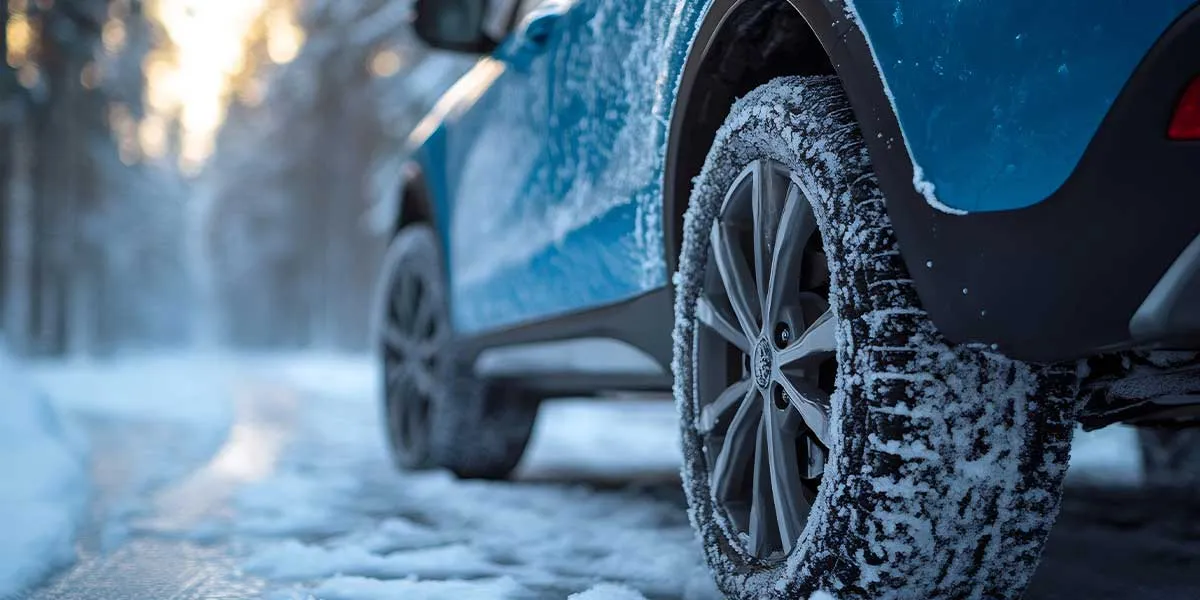
On designated BC highways, winter tires or permitted traction equipment are required from October 1 to March 31, with some routes extending the requirement to April 30. For passenger vehicles, qualifying winter tires must display the three-peaked mountain and snowflake symbol or M+S marking, with at least 3.5 mm of tread depth.
Although M+S tires may meet the legal requirement, dedicated mountain-snowflake winter tires generally provide better cold-weather performance. Check the official BC winter tire route requirements before traveling.
Essential Vehicle Checks and Emergency Supplies
Before driving in the snow, inspect:
- Tire pressure, tread, and visible damage.
- Windshield wipers, washer fluid, and lights.
- Battery condition and available fuel.
- Windows, mirrors, roof, and headlights for accumulated snow.
Carry warm clothing, drinking water, a flashlight, a shovel, a first-aid kit, and suitable traction aids. A prepared car in snow is easier to manage, but preparation never guarantees safe travel.
How to Drive in Snow: Steering, Braking, and Acceleration
The central principle of winter vehicle control is smooth movement. Tires have limited grip, and sudden inputs can exceed the available traction. If you are wondering how do you drive in snow without constantly losing control, begin by treating steering, acceleration, and braking as gradual actions.
Accelerate and Brake Without Losing Traction
- When driving in snow, apply the accelerator gently to reduce wheelspin. Leave substantially more space between vehicles and begin slowing earlier than usual.
- Brake progressively rather than waiting until the last moment. If your vehicle has ABS and emergency braking is necessary, maintain firm brake pressure and steer as needed.
- Avoid cruise control on slippery roads.
- The most useful lesson in how to drive safely in snow is anticipating hazards early enough to avoid emergency maneuvers.
Handle Turns, Hills, and Longer Stopping Distances
Reduce speed before entering a curve, not halfway through it. Steer smoothly and avoid aggressive acceleration while turning. On hills, avoid unnecessary stops where traction is limited. Choose a safe speed before descending and follow your vehicle manufacturer’s guidance on appropriate gearing. The best advice is to maintain enough control and visibility to stop within the clear distance ahead.
Driving on the Snow vs. Ice: How to Recognize and Respond to Skids
- Driving on the snow often provides more predictable grip than driving on nearly invisible ice, although either surface can cause a skid.
- If the vehicle begins sliding, look toward your intended path, ease off the accelerator, and steer smoothly in the direction you want to travel. Avoid overcorrecting.
- If the front tires lose grip, reducing steering input may help them regain traction. With rear-wheel skids, controlled steering toward the intended path is essential.
- Electronic stability control can assist, but it cannot overcome the laws of physics.
- Practice skid recognition only in an approved, controlled training environment.
First Time Driving in Snow: Common Beginner Mistakes
Your first time driving in snow should not involve testing your abilities during a major storm. Common beginner mistakes include following too closely, braking late, oversteering, and assuming all-wheel drive improves stopping distance. Drivers sometimes search how do i drive in snow after discovering that familiar braking distances no longer apply. The answer starts with developing consistent observation and anticipation habits.
General advice for driving in snow is helpful, but supervised practice provides a better understanding of vehicle response. Learners researching common mistakes on the G2 road test should also recognize that G2 belongs to Ontario’s licensing system. British Columbia uses a different graduated licensing structure.
At Seymour Driving School, the focus is on building practical driving awareness and confidence appropriate to each learner’s experience.

Driving in Snowstorm Conditions: When Should You Stay Off the Road?
- Heavy snowfall can make lane markings disappear, conceal obstacles, and reduce the distance available for identifying hazards.
- Among the most important tips for driving in the snow is knowing when a trip is unnecessary.
- Before driving in snowstorm conditions, review DriveBC for road conditions, closures, and travel advisories.
- If visibility becomes inadequate, find a safe place away from moving traffic to stop. Avoid sudden roadside stops or parking where snow-clearing vehicles operate.
- When severe conditions make safe vehicle control uncertain, postponing travel is the responsible decision.
What to Do When Your Car in Snow Gets Stuck
If your vehicle becomes stuck, avoid repeatedly pressing hard on the accelerator. Excessive wheelspin can dig the tires deeper into the snow. Assess whether it is safe to exit the vehicle, then clear snow from around the tires and exhaust outlet if accessible.
Use suitable traction aids only according to your vehicle manufacturer’s instructions. Avoid aggressive rocking or repeated gear changes that could damage the transmission. If recovery is unsafe, contact roadside assistance.
Never run the engine when snow obstructs the exhaust, as dangerous carbon monoxide can accumulate inside the vehicle.
Final Thoughts: Build Confidence for Safer Winter Driving
To drive safely in snow, prioritize preparation, smooth vehicle control, and sound judgment. No driving technique eliminates winter hazards, but informed decisions and appropriate instruction can help you navigate British Columbia’s changing road conditions with greater confidence.
Frequently Asked Questions
What Are the Best Cars for Driving in Snow?
Vehicles equipped with quality winter tires, electronic stability control, and reliable brakes are strong choices. All-wheel drive can help with acceleration, but tire quality and driver behavior remain essential for stopping and cornering safely.
What Are the Dangers of Driving in Snow?
Major hazards include reduced traction, longer stopping distances, black ice, poor visibility, and hidden road markings. These conditions increase the likelihood of skidding, collisions, and losing control on hills or curves.
Is It Safe to Drive in Snow?
It can be reasonably safe when roads are manageable, the vehicle is properly equipped, and the driver adjusts to conditions. During severe storms or extreme icing, avoiding travel may be the safest option.
Can Driving in the Snow Damage Your Car?
Yes. Road salt can accelerate corrosion, hidden ice can damage components, and excessive wheelspin may strain the drivetrain. Regular washing, proper maintenance, and careful driving help reduce these risks.
Can You Do a Driving Lesson in the Snow?
Yes, when conditions are suitable and the instructor determines that a lesson can be conducted safely. Severe weather may require rescheduling. Winter lessons should emphasize hazard awareness rather than deliberately exposing beginners to dangerous conditions.