1. Look Far Ahead
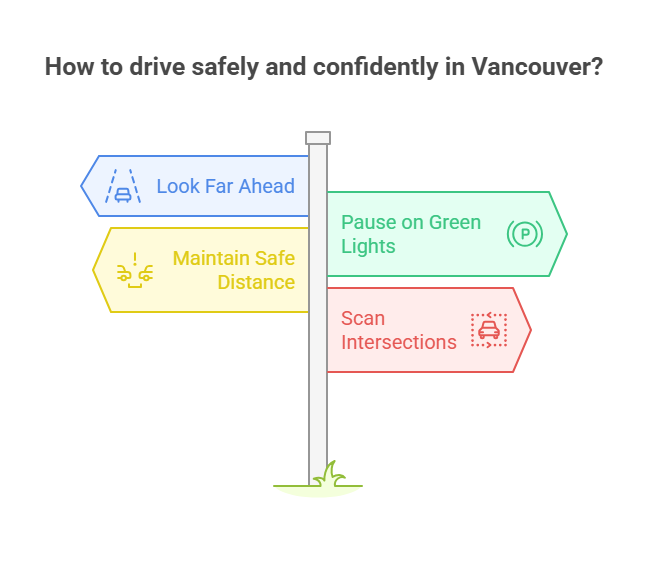
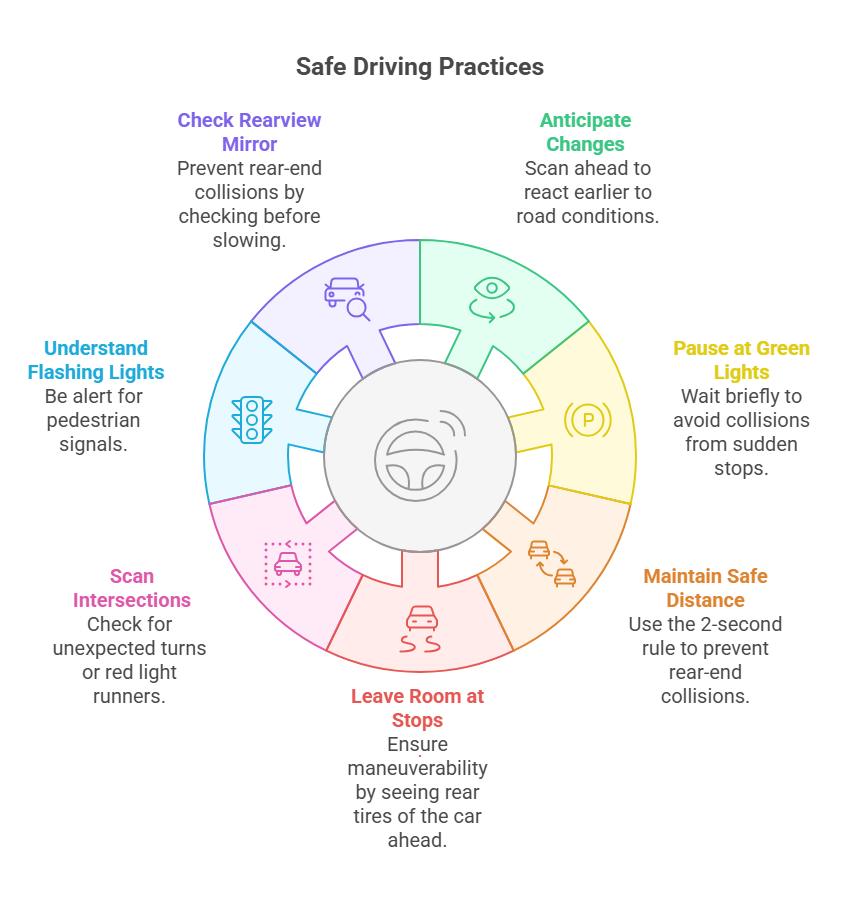
Don’t focus just on the road immediately in front of your car. Train your eyes to scan further ahead so you can anticipate changes and react earlier. This habit improves awareness and decision-making.
2. Pause Briefly on Green Lights
When a light turns green, wait 2–3 seconds before proceeding. This gives space for the car ahead to move and allows you to avoid collisions from sudden stops.
3. Maintain a Safe Following Distance
Use the 2-second rule: choose a fixed point and count as the car in front passes it. If you reach the point before 2 seconds, you’re too close. Maintain more distance in rain or snow.
4. Leave Room at Stops
When stopped behind another car, make sure you can see their rear tires touching the road. This allows enough room to maneuver if needed.
5. Always Scan Intersections
Even with a green light, check left, center, right, and left again before entering any intersection. Drivers sometimes run red lights or make unexpected turns.
6. Understand Flashing Green Lights
In B.C., flashing green lights are pedestrian-controlled. You may proceed, but stay alert for pedestrians activating the signal.
7. Check Rearview Mirror Before Slowing
Always glance at your rearview mirror before braking. This helps prevent getting rear-ended and gives you time to respond.
8. Solid White Lines = No Lane Changes
Changing lanes over solid white lines is unsafe and illegal. Stay in your lane until the line becomes dashed.
9. Lane Use on 50 km/h Roads
There’s no designated fast or slow lane on 50 km/h roads. Left lanes often have left-turning traffic; right lanes may have parked cars. Choose based on your route.
10. Pedestrian Signs Aren’t Always 30 km/h Zones
Yellow pedestrian signs are warnings, not speed limit changes—unless accompanied by a regulatory (black and white) sign.
11. Make Eye Contact with Other Drivers
If you’re unsure whether another driver sees you, try to make eye contact. If they aren’t looking, proceed cautiously.
12. Don’t Copy the Car Ahead Blindly
Following another vehicle without checking for yourself can be dangerous. Always make independent decisions.
13. Yield When Turning Left
If you’re turning left at an intersection, you must yield to oncoming traffic going straight.
14. Always Watch for Pedestrians at Crosswalks
Scan both sides and the middle of the crosswalk. Stop if a pedestrian is in or about to enter your lane.
15. Be Cautious Around Cyclists
Treat cyclists as vehicles when they’re riding and as pedestrians when walking their bikes. When in doubt, wait.
16. Know the Rules of 30 km/h Zones
Black and white 30 km/h signs are law. These zones are in effect 24/7 unless a different speed sign appears.
17. Treat Broken Traffic Lights as 4-Way Stops
If traffic signals aren’t working, come to a complete stop and proceed as if it’s a 4-way stop intersection.
18. Give Space to Large Vehicles
Trucks and buses need more room to turn or back up. Don’t crowd them—wait and watch.
19. Merge Before Your Lane Ends
Don’t wait until the last second to merge. Do it early to ensure a smooth transition and avoid sudden stops.
20. Yellow Signs Are Advisory
Yellow speed signs or curve warnings are recommendations, not laws—but you should still follow them for safety.
21. Yield at Roundabouts
When entering a traffic circle, yield to vehicles already inside. Once you’re in, you have the right-of-way.
22. Always Make a Complete Stop at Stop Signs
Stop fully before the line or crosswalk. Look for pedestrians and other vehicles before proceeding.
Final Thoughts
Whether you’re learning to drive in Vancouver, Burnaby, or West Vancouver, mastering these tips can make a significant difference in your safety and confidence. These principles aren’t just for passing the ICBC test—they’re for building lifelong driving habits.
If you’re looking for hands-on training from experienced instructors who know the local routes and rules, Seymour Driving School is here to help.
Book your first lesson today and take the first confident step on your driving journey!